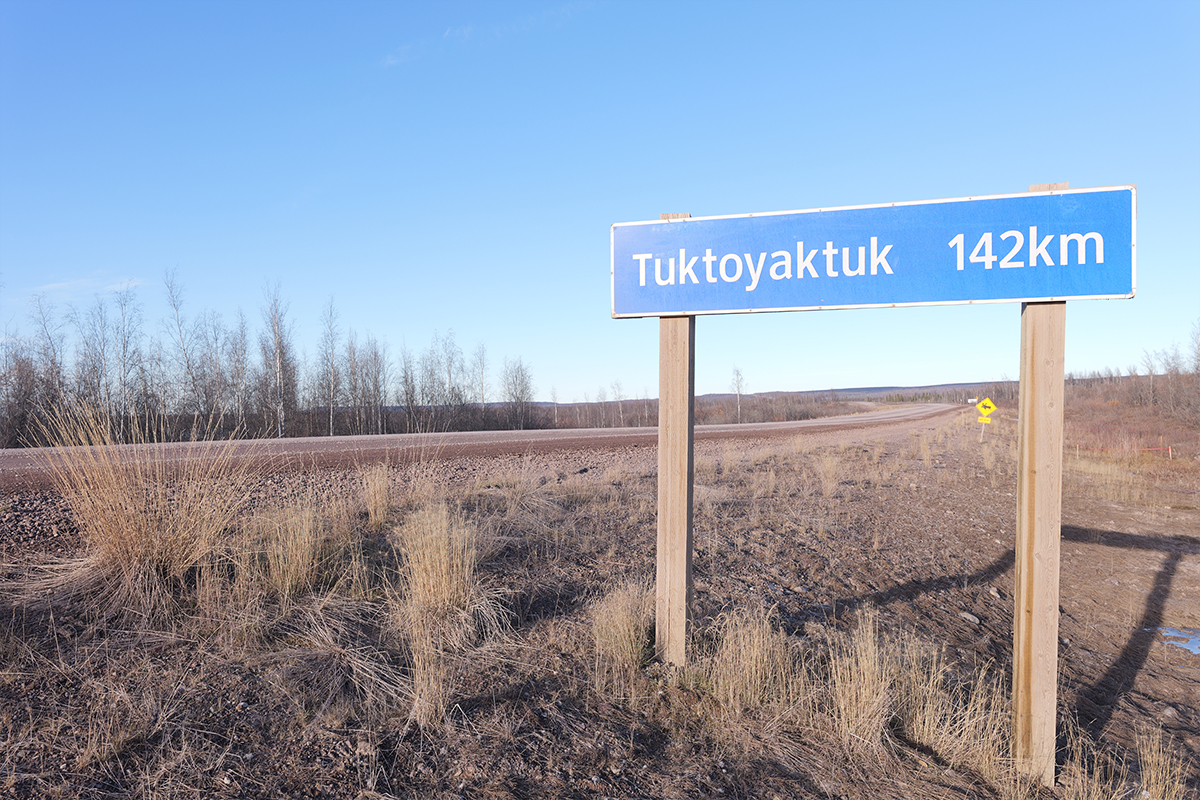


The simplest truth is this: the North is being asked to carry national security on top of service gaps that should have been fixed years ago.
The newest evidence is not a slogan. A 2025 analysis by L’Observatoire de la politique et la sécurité de l’Arctique (OPSA) flags climate stress across 56 military and paramilitary sites in Inuit Nunangat—runways, radar stations, and permafrost-exposed facilities already strained by flooding risk, thaw, and erosion. The study points to Yellowknife as a vulnerable hub and describes airstrips as a major operational bottleneck, with runway capability likely to shrink as thaw destabilizes infrastructure. It also highlights North Warning System sites located on permafrost and eroding coastlines, with flood exposure in some locations. That is a defence story—and it is also a basic services story.
Because the North’s “defence infrastructure” is rarely just defence infrastructure. Airports move medevacs and food freight before they move troops. Ports and roads enable community access before they enable sovereignty theatre. Connectivity supports local government and schooling before it supports military communications. When these systems fail, the first pain is civilian, and the second pain is strategic.
That’s the system constraint Ottawa keeps running into: northern economies are small markets with thin private capital, high logistics costs, short construction seasons, and limited local maintenance capacity. Government and nonprofits are the anchor institutions. Infrastructure is not a growth add-on; it is the platform beneath everything else. And climate change doesn’t politely wait for federal funding cycles, procurement disputes, or departmental turf wars. It degrades assets in real time.
So why the new rush of “dual-use” framing?
Because defence is a faster political vehicle than basic services. It can justify big capital spending without reopening the national argument about chronic underinvestment in northern housing, utilities, and transport. It lets Ottawa say “sovereignty” instead of saying “we let critical infrastructure age past its tolerances.” It lets decision-makers align multiple objectives—trade corridors, domestic supply chains, Arctic diplomacy, and military readiness—under one banner.
The hidden assumption is that defence framing is the fastest path to civilian resilience. In southern Canada, maybe. In Northern conditions, it is a risky bet.
Here is why. Defence institutions optimize for mission assurance: reliability, redundancy, and control. Civilian systems optimize for access, affordability, and continuity of service. Those goals overlap, but they are not identical. When you frame a runway primarily as a national security asset, you quietly change who gets to define “success,” who sets the design requirements, and whose timeline matters. You also change what gets funded: capital expansions and headline projects often outrank maintenance, operations, training, and local capacity—the unglamorous work that keeps the lights on in January.
The incentives are predictable.
Ottawa wants speed and legibility. A $1 billion Arctic Infrastructure Fund framed around “dual-use” transportation projects is easier to sell than a years-long conversation about baseline service levels and infrastructure backlogs. Big announcements carry clear lines of accountability. Maintenance does not.
Defence planners want deployability. If only a minority of airstrips can accept certain aircraft today, then runway upgrades become a readiness issue. That logic is rational. But it naturally privileges specific operational needs—length, surface, load-bearing capacity—over broader community priorities like year-round reliability, drainage, and local maintenance regimes.
Procurement officials want compliance and risk containment. A “Buy Canadian” policy that requires Canadian-produced steel, aluminum, and wood products for large federal construction and defence projects reflects a domestic industrial strategy. That is also rational. But in remote communities, the binding constraints are shipping windows, storage, skilled labour availability, and contractor risk premiums. Tight domestic-content rules can become schedule risk and cost risk—especially when the local supply chain is thin and the replacement parts are far away.
Territorial and municipal governments want functional infrastructure they can operate. They inherit the ongoing cost, the staffing burden, and the political fallout when things break. If the project is designed to meet a federal mission requirement but not to match local operating realities, it becomes another asset the North is expected to maintain without the tools to do it.
Inuit governments and development corporations want durable ownership and predictable benefit, not just “participation.” They are rational to push for equity, governance, and long-term revenue in assets built on Inuit land. When defence framing accelerates project selection without clearly defining decision rights and obligations, it increases conflict risk and delays—exactly the opposite of what the “security” argument claims to solve.
Contractors respond to what the system rewards. If the reward is winning a build, they price the North’s complexity and minimize long-tail obligations. If the reward is decades of performance, they design differently. Defence-driven megaproject logic tends to emphasize delivery milestones; northern resilience requires lifecycle accountability.
The costs of getting this wrong are not abstract. They show up as capacity and trust.
Capacity: local operators stuck with specialized assets without stable operations funding or training pipelines. Maintenance backlogs that quietly erase the “new capability” within a few seasons. Airports and ports that look improved on paper but remain fragile under thaw dynamics.
Trust: communities that hear “security” and reasonably conclude their basic needs only get attention when southern institutions need something. Consultation treated as a schedule obstacle instead of a design requirement. Partnerships that become transactional rather than strategic.
Resilience: a system that grows more dependent on a few hubs—like Yellowknife—without systematically reducing single points of failure. A North that becomes more “important” to Ottawa while remaining underbuilt for residents.
A better logic is available, and it doesn’t require rejecting national security investment. It requires refusing to let defence be the only adult in the room.
If the goal is civilian resilience and sovereignty, then infrastructure must be planned and funded as a public service platform first—with defence as a demanding customer, not the default owner of the narrative. That means designing to Northern operations: permafrost-aware engineering, drainage and flood protection, modular repairability, local maintenance capacity, and stable lifecycle funding. It means procurement rules that protect domestic industry without pretending the North is Southern Ontario with snow. It means treating Indigenous governance and equity as core infrastructure—because legitimacy and local decision power are what make assets durable.
Security dollars can help build the North. But they can also shrink the North’s priorities to what fits a military checklist.
Defence is not the workaround for service gaps. It’s the stress test that proves those gaps were never affordable in the first place.